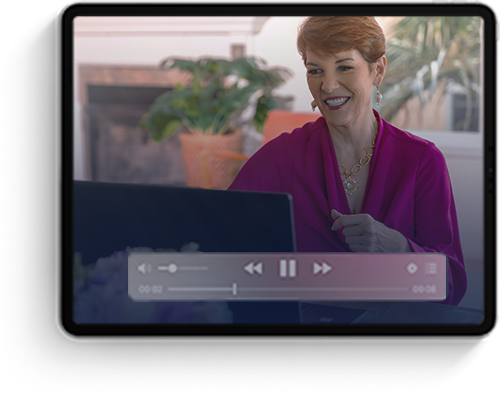
Holiday Networking for Interior Designers: Where to Show Up
TL;DR
When I ask a design firm principal what they’re doing for marketing and the answer is industry mixers and showroom soirees, I have to break the news. Your colleagues are wonderful, and they’re never going to hire you.
Episode Three of the holiday marketing series. The seven rooms worth your evening, four reliable ways to get invited, what to say when someone asks what you do, the two mistakes that make an evening worthless, and the 48 hours that decide whether any of it mattered.
Highlights
➜ 02:00 Why industry events are a perk rather than a marketing channel
➜ 04:00 The seven rooms worth your evening
➜ 09:00 Four reliable routes to an invitation when you have none
➜ 12:00 What to say when they ask what you do, and why I’m an interior designer kills it
➜ 17:00 The two mistakes that make the evening worthless
➜ 23:00 The 48 hours that decide everything
The Industry Mixer Is a Perk, Not a Marketing Channel
The design association party, the showroom open house, the market mixer, the mastermind gathering. Those rooms are full of people who’ll never hire you. They’re peer support, trade knowledge, and occasionally a referral when a colleague is overbooked. Worth attending, worth enjoying, not worth confusing with marketing. Your ideal client is standing in a room where nobody else is a designer, and that’s where you want to be.
The 7 Rooms Worth Your Evening
1. Charity Galas and Fundraisers.
The affluent in your market gather for causes, and they do it in November and December more than any other month. The ticket is an investment in proximity to profits.
2. Club and Neighborhood Gatherings.
Country club parties, golf and tennis events, progressive dinners, and HOA gatherings in the communities you want to work in and those you’ve already done a project or three in. (Yes, clients will need to provide these invites and happy to when asked the right way.)
3. Profit Partner Events.
Builder parties, realtor open houses, architect gatherings, cabinet shop and showroom client events. Their guests are your prospects, already vetted by someone with a stake in the game who does not compete with you.
4. Wealth Advisor and Attorney Client Events.
They host their best clients, and those clients have assets and homes. Few designers think to ask for a seat, and some decline because no colleagues will be there. That’s the point. You’re not there to pitch or sell, you are there as a valued professional. You can introduce guests to one another, you can share warm words about the host, you can create memorable conversation.
5. Art Openings, Wine Tastings, and Auction Previews.
Culture draws people with discretionary income and aesthetic interest, which is your ideal client almost by definition. Get on the mailing lists of key galleries and auction houses. When wine is something you enjoy, look for wine dinners at fine restaurants and wine tastings in your area.
6. Interest and Hobby Gatherings.
The equestrian party, the yacht club dinner, the garden club gala, the car club event. When your ideal clients have an interest, that interest has a holiday party. When you enjoy what they enjoy, you belong at that table.
7. School, Church, and Community Events.
Private school auctions are among the most concentrated rooms of affluent homeowners anywhere, and few designers are attending these events. (You don’t have provide a silent auction item to attend.)
Years ago, a friend was gifted tickets to a benefit for the International School in Atlanta and asked whether I wanted to go. Neither of us had children. Everyone in the room was at the top of their industry, and the table I sat at produced a couple of future clients.
Notice how many of these you already have a connection to and never thought of as marketing. Your club. Your niece’s school. The charity you support. You’ve been attending as a guest rather than as a design professional who’s present.
Four Reliable Routes to an Invitation
1. Ask Your Clients.
They belong to clubs, boards, congregations, and committees. One sentence does it: I’d love to support that cause, is there a way for me to attend? Most people are delighted to bring a guest, and the proudest thing a happy client can do is introduce you to their circle.
2. Ask Your Profit Partners.
Builders, realtors, and architects host client events in November and December, and they’re frequently thrilled to have a design partner present who makes their project look finished. Offer to contribute, co-host, or sponsor.
3. Volunteer on a Committee.
The single best route, and the slowest. Committee members get invited to everything, know everyone, and are seen as insiders rather than attendees. A gala committee in November means a seat at every table that organization touches all year.
4. Host Your Own.
A holiday open house at a recently completed project, with your client’s enthusiastic permission, is one of the most powerful events a design firm can host. Their friends come to see the house, you’re the reason it looks that way, and no one needs to be sold anything. Co-host with a builder or realtor and you split the investment and double the guest list.
What to Say When They Ask What You Do
You’ll be asked a dozen times a night, and most designers answer with four words. I’m an interior designer.
That labels you. You’re parked on a mental shelf, the box is ticked, and the conversation is over.
Give them the transformation instead. I work with families who love their location and have outgrown their house, and we deliver a home that finally fits how they live. Or, I turn houses people bought into homes they’re proud to host in. Now they lean in. Tell me more. My sister needs you. Honestly, our kitchen’s a disaster.
My favorite is to lead with a client testimonial. My client says I’ve ruined her for five-star hotels, and she loved the transformation so much she’s getting off the road for a couple of years to enjoy time at home. When they ask whether I’m a decorator, I reply gently that I’m an interior designer who works with successful professionals ready for a true sanctuary at the end of their crazy busy days.
Keep a couple of these in your back pocket and tailor them to the person in front of you.
Then stop talking. Be more interested than interesting. Two thirds listening, one third speaking, exactly as in design discovery. The person who asks the better questions is remembered as the more interesting one in the room, every time.
And resist diagnosing their home at a party, even when they ask. I did it in my early days. Six months later nothing had changed and they’d never called. The moment you offer solutions over a glass of wine, you’ve become the consultant they didn’t hire, and the entertaining person they were enjoying has vanished.
Two Mistakes That Make the Evening Worthless
Arriving as a guest rather than a professional who’s present. Same outfit, same smile, entirely different intention. A guest waits to be approached. A professional starts conversations, introduces other people to each other, and leaves having been useful to the host and to fellow guests.
Treating the room as a transaction. People feel the difference between curiosity and hunting from across the room, and in affluent circles that sensitivity is finely tuned. Hunting gets you remembered and avoided, and in a small market that reputation travels.
The most attractive thing you can do at a holiday party is introduce two people to each other because you noticed they should meet. It makes you the connector, and both of them remember who did it.
Three Conversations Beat 30 Handshakes
Don’t be the designer working the room collecting contacts and leaving with names but no relationships. I’d rather you went without a business card and said, I’d love to get your contact and follow up in the next couple of days.
Find the thing you have in common, because points of connection become points of profit. A shared school, town, or love of dogs beats a flawless elevator pitch. I don’t believe in elevator pitches anyway. I believe in conversation openers, and most of us back up when we feel a pitch coming.
Go with a purpose and a number, and three is plenty. Bring a profit partner, since introductions are easier when someone else makes them, and brief your wingman to introduce themselves when you don’t, because that means you’ve forgotten a name. Eat first so you’re present rather than scoping the buffet. Keep the drinking light, because you’re working however lovely the evening is.
And you’re the interior designer in the room, so you will be looked at. That’s not vanity, it’s marketing. Wear the thing that’s memorable and unmistakably yours. Pattern and color, remarkable eyeglasses, a hat, extraordinary shoes. Mine tends to be a jacket and jewelry.
The 48 Hours That Decide Everything
Almost all of this is won or lost after you leave.
Within 48 hours, every meaningful conversation gets a follow up. An email, a handwritten note, or a connection request with a personal line. Not a pitch. A reference to the specific thing you discussed.
Lovely to meet you at the Hendersons’ party. I’m still thinking about your Iceland trip, and I’d love to hear your most memorable moments and what you collect along the way. That opens a door without pushing anyone through it, and asking what they collect is a beautiful way in for any designer.
Without that follow-up, the evening was a social occasion rather than a marketing success. Pleasant and unproductive. I’m going for pleasant and potentially profitable.
So, capture while you’re there. Phone, discreetly, in a quiet moment. Name, where you met, one personal detail, one thing to follow up on. Wait until you’re home at 11 and you’ll remember 2 names out of 5 and none of the details. Thirty seconds in a quiet corner protects the whole evening.
Choose 6, Not 26
You can’t attend everything and you shouldn’t try. Your installations still need you.
Choose 4 to 6 events for the season, 8 when you’re ambitious, and select them based on one question. Who’s in the room? Not who invited you. Not which one you feel guilty about declining. Not which one your colleagues are attending.
Everything else is a polite no, and a polite no in November or December is expected and forgiven, because everyone assumes you have too many invitations. Even when you don’t, let them think so. Guilt is optional, and you don’t have to choose it.
Your Assignment This Week
List every event you know of between now and the new year, including the ones you have no invitation to but want.
Score each on 3 questions. Are my ideal clients in that room? My profit partners? My gate openers? Keep the top 6 and decline the rest.
Then do 3 things. Ask one client and one profit partner for an introduction. Put your 2-sentence answer on a note card and say it aloud until there’s no hesitation. And schedule your follow-up block for the morning after each event now, while you still remember you’ll be tired.
Frequently Asked Questions
Are design industry events good marketing for interior designers?
They’re a perk rather than a channel. They deliver peer support, trade knowledge, and the occasional overflow referral. Your ideal client is in a room where nobody else is a designer.
Where should interior designers network during the holidays?
Charity galas, club and neighborhood gatherings, profit partner events, wealth advisor and attorney client events, art and wine events, hobby gatherings, and private school benefits.
How do I get invited to events I don’t have access to?
Ask a client, ask a profit partner, volunteer on a committee, or host your own. Committee work is the most powerful and the slowest.
How many events should I attend in a season?
Four to 6, or 8 when you’re ambitious, chosen on one question. Who’s in the room?
What should I say when someone asks what I do?
Never I’m an interior designer, which labels you and ends the conversation. Lead with the transformation or a client testimonial, then ask about them.
About Melissa Galt
Melissa Galt is a sought-after business coach, marketing consultant, keynote speaker and workshop leader who empowers designers to build highly profitable businesses, without the burnout. With over three decades as the principal of her namesake successful residential design firm, Melissa brings firsthand experience and proven strategies to guide creative professionals toward earning more in less time, with less stress.
She is the author of four transformative bestselling books, Marketing Luxury Design: Attracting Affluent Clients; The Language of Success: 35 Words to Boost Your Worth & Wealth; Design Discovery: The Proven Process to Land Ideal Clients & Grow Profit, and Proximity to Profits: 50 Strategic Locations to Meet Affluent Clients.
She is also the host of the weekly Design Business Freedom™ podcast, where she shares unfiltered advice on mindset, money, and marketing for interior design pros ready to elevate their game. When you’re ready to take your practice to the next level, book a complimentary Design Business Assessment with Melissa.
Melissa draws inspiration from her legacy of iconic creatives including her mother, the late Academy Award-winning actress Anne Baxter; her godmother, the legendary eight-time Oscar-winning costume designer Edith Head; and her great-grandfather, American architectural icon Frank Lloyd Wright.
Listen to this episode on Design Business Freedom™ Podcast, Episode 215.
Available on Apple Podcasts, Spotify, Audacy, Deezer, Podchaser, and Everand.
GET MORE OF MELISSA, ON THE PODCAST!
Subscribe to the podcast, Design Business Freedom™, and get the best in smart systems, proven processes, and the right strategies and resources to take your design practice to the next level.
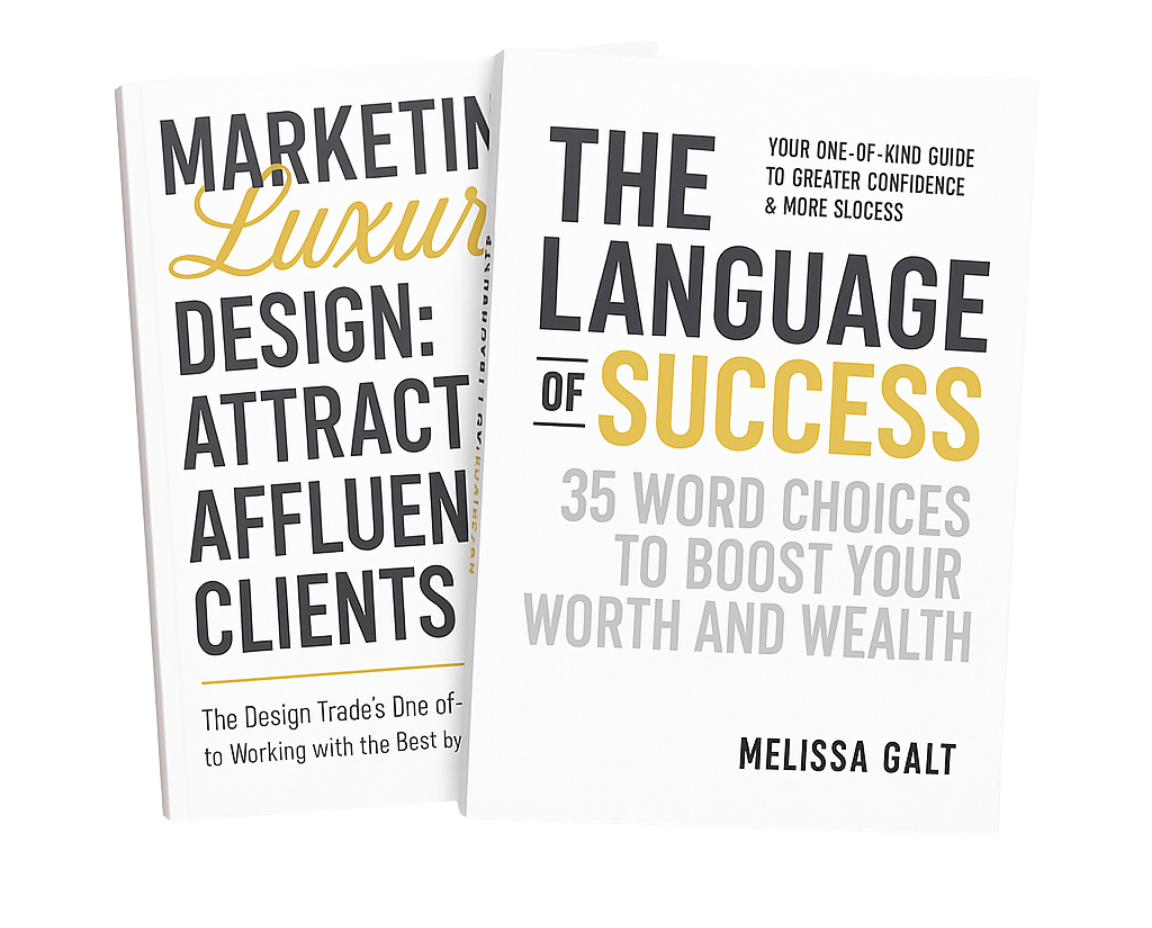
Book Bundle
Marketing Luxury Design:
Attracting Affluent Clients
The Design Trade's One-of-a-Kind
Guide to Working with the Best
The Language of Success:
35 Word to Boost Your Worth & Wealth
Your One-Of-A-Kind Guide To Greater Confidence and More Success
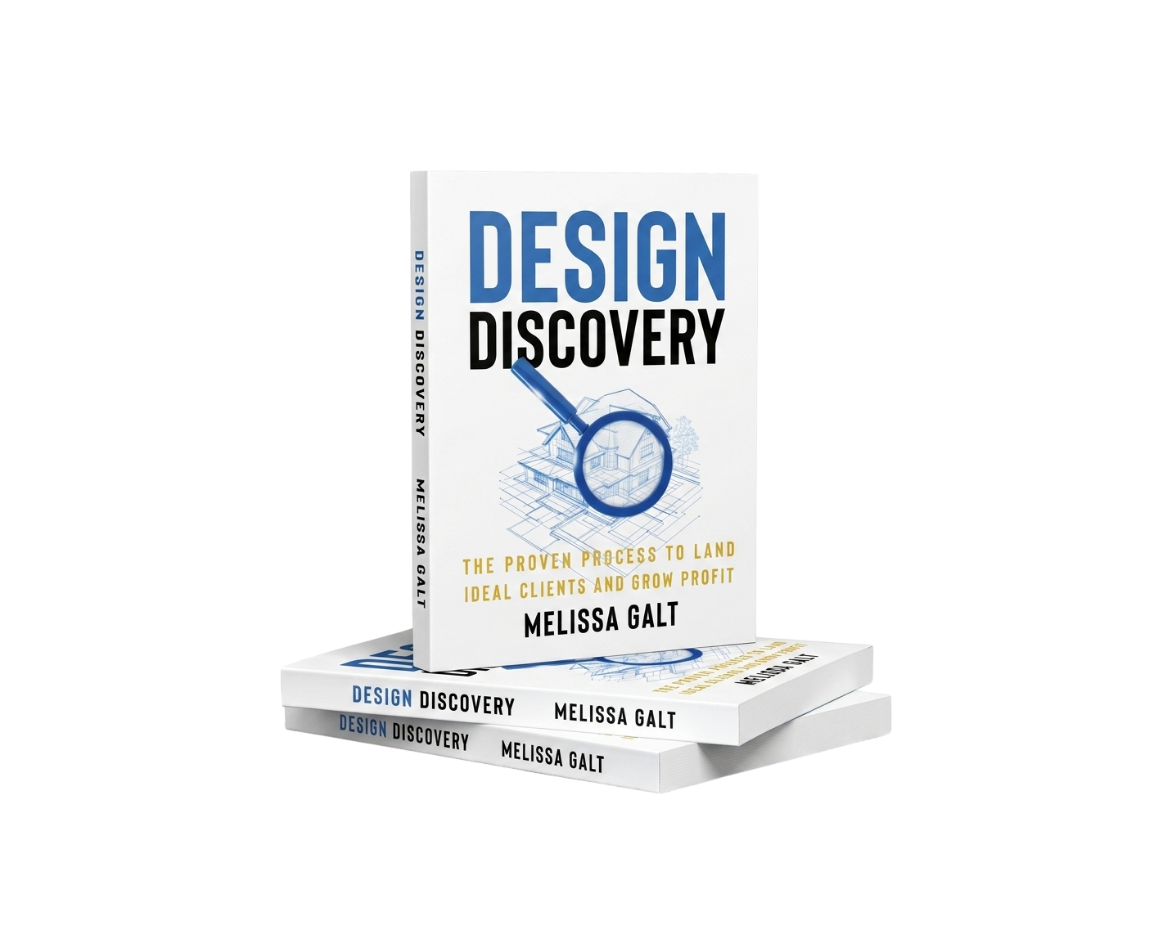
Design Discovery
The Proven Process To Land
Ideal Clients and Grow Profit