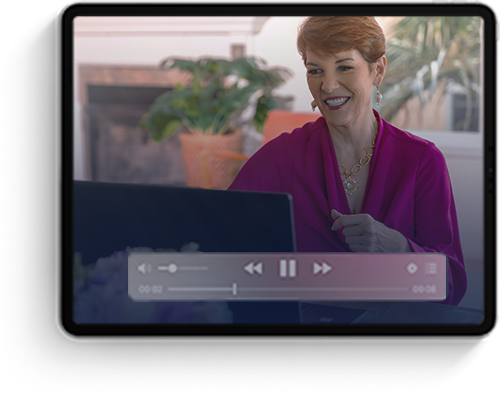
Scaling Your Interior Design Business Sustainably: Profit & Freedom
TL;DR
Profit creates choices. Choices deliver freedom. That is the entire sixth pillar, and it is the reason the other 5 exist.
The finale of the Scale Your Interior Design Practice Sustainably series. Why profit is an outcome rather than an activity, how to design it instead of discovering it in December, the 4 freedoms worth building toward, and why your enough is the most strategic number in your business.
Highlights
➜ 02:00 Profit is a supply of options, never a scoreboard
➜ 05:00 Which of the 5 pillars is leaking, and how to tell
➜ 06:00 Take profit first, and pay yourself like the talent you are
➜ 08:00 The 4 freedoms worth designing on purpose
➜ 14:00 Why enough is the most strategic number in your business
➜ 18:00 The vision board I require before coaching begins
➜ 22:00 The permission problem that keeps you working anyway
➜ 34:00 One year from today, and the clients who got there in 6 months
Profit Creates Choices
Profit gets talked about as though it were a scoreboard. It’s not a scoreboard. It is a supply of options. A design business without profit has no options. It says yes because it must, discounts because it’s nervous, and keeps the founder in the center because there is nothing to invest to get them out.
Profit lets you decline the project that would’ve consumed your spring. Hire before you’re drowning. Ride out a quiet quarter without discounting. Fund the trips, the sabbaticals, and the retirement account.
A designer told me recently that the best thing about profit was not the money. It was saying an elegant no to a poor-fit prospect and never thinking twice about it. That’s freedom in a single communication.
Why Profit Comes Last When You Scale an Interior Design Business
Position, price, process, people, pipeline, and profit and freedom at the center of all of it. Profit sits at the end because it is an outcome, not an activity. Nobody ever sits down on a given Tuesday and creates profit. Positioning lets you invest appropriately. Pricing funds your process. Process lets you build a team. Team plus pipeline creates capacity. Profit is the result when those 5 are working.
So, when your profit is slim, the answer is almost never to work harder. It is to find which pillar is leaking.
Slim margins with strong revenue mean pricing. Chaos and rework mean process. Everything running through you means talent and team. Feast and famine mean a weak pipeline. Poor fit clients mean positioning every single time. Identifying it is step one. Then you have got to fix it.
Profit Is a Decision, Not a Leftover
Profit is designed, never discovered. When you are discovering profit by whatever remains in December, it arrives as a wow or an uh-oh, usually the second one.
So, take it first. Decide the percentage that belongs to profit and move it to its own account before you pay anything else. Your business learns to run on what remains.
And pay yourself properly. Owner compensation is not profit. You are an employee of your business with a market value, and profit is what the business earns on top of paying for its talent. You are the chief talent.
Get clarity on the money moving through your firm too, so you are never misled into thinking a $200K client payment belongs to you. It belongs to product, payroll, and operating expenses, with a percentage set aside for profit.
Profit also funds what comes next. Documenting your process, hiring, marketing, better photography, and coaching. All of it is paid out of profit, or it doesn’t happen, which is why slim profit does more than shrink your paycheck. It freezes your practice at its current size. It stalls your growth.
The 4 Freedoms Worth Designing
1. Time freedom.
Control over your hours and calendar. Hours you choose rather than hours that choose you. On a calendar it looks like a 4-day week.
2. Money freedom.
Enough profit and reserve that a slow quarter is an inconvenience rather than a crisis. 3-6 months of overhead and payroll is the usual advice, and I prefer 9, because that’s where anxiety stops running your decisions.
3. Choice freedom.
The ability to say no to a project, client, or referral that flatters you and doesn’t fit. Also to decline a poor-fit hire and hold out for the right talent, which saves you a fortune and your peace of mind.
4. Legacy freedom.
A business that can grow, transition, or be sold. A practice depending entirely on its founder cannot be sold or transitioned and cannot survive a long absence. You do not have to want to sell for this to matter. Building it as though you might is what makes it enjoyable to own.
Name yours and rank them, because they trade against each other. The path to legacy freedom sometimes requires sacrificing time freedom for 18 months, and knowing which you are buying makes that a decision rather than a resentment.
More Is Not the Plan. Define Your Enough.
For years I thought scaling meant more clients and a fuller calendar. I am very good at more. So, I built exactly that and got exactly what I asked for. More money without time to enjoy it. More work with boat loads means more sacrifice. More clients without discernment.
I had the revenue, the volume, and the reputation. I had no freedom, which was the entire reason I started.
More is not the plan. More is what happens when you never define exactly what you want. And “enough” is not a lazy word. It is the most strategic number in your business, because it is the only one that tells you when to stop, when to say no, and when you have already won.
You have a people pleaser running your design practice, and that pleaser does not know when enough is or how to say no. So declare it yourself. And know that enough is fluid. You can reach it and decide it is wonderful, or decide it is no longer enough and declare a new one. You are never stuck at a level.
Design the Life, Then Build the Business to Fund It
You can describe a client’s dream home in exquisite detail and cannot describe your own ideal week. So, reverse it. What does your extraordinary life require annually, in time and money? Not a fantasy number. Housing, travel, retirement, the people you support, the causes that matter. What do you want to be doing at 40, at 60, at 75?
That total is your target owner compensation. Add what the business needs including reserve, plus your profit percentage, then divide by your average project value to see how many projects you need. Now every decision has a reference point.
And the beautiful part of being creative is that we never have to stop. We reinvent, reimagine, reignite. Iris Apfel did not become an influencer until 80-plus years of wisdom.
Then build a vision board with business and life on the same board. I require one before coaching begins, because your extraordinary life delivers exceptional clients for amazing projects, and the business delivers the time and resources for that life. They are not siloed. We have the gift of a lifestyle business, which few professions do. Keep it where you see it daily, so it creates a future pull, and refresh it whenever the vision feels too small.
The Permission Problem
There is one more obstacle and it isn’t strategic at all.
Plenty of designers build the profit and never take the freedom. You hit your numbers and keep the long hours. You hire team and keep doing the work yourself. Somewhere along the way, being needed started to feel like being valuable. You are valuable regardless, and worth far more leading your firm than doing all of it yourself.
I am not above this. It took me an embarrassingly long time to stop measuring my worth by how indispensable I was, and the day I stopped was the day my business got better rather than worse.
So take the Friday off. Book the trip you have meant to take for 2 years, non-refundable, because you will get squeamish as it approaches. Freedom unused is simply a nicer looking cage.
Be, Do, Have
The order matters and never works backward. You become the leader of your firm first. Pick your title. I like founder and CEO, which is how I refer to every designer I work with, because that is how I see them. When you embody that, you do what CEOs do, and then you have the business and life that comes with it. Most designers run it in reverse, waiting for the revenue before doing the CEO work, and that stalls every time.
Decide who you are being this week. The designer who knows their value, quotes with confidence, documents rather than remembers, and markets while busy. And when leading a firm is not what you want, that is a legitimate discovery rather than a failure.
Our industry needs exceptional team members, and the best of them have no desire to be the founder. Leading a project is very different from leading a firm.
The 6 Pillars in One Pass
✔ POSITIONING, know your value before you quote.
✔ PRICING, because profit is designed and never discovered.
✔ PROCESS, because consistency creates confidence and your firm should not run on memory.
✔ PEOPLE, because sustainable businesses are not built alone.
✔ PIPELINE, because word of mouth is not a marketing strategy.
✔ PROFIT AND FREEDOM, because profit creates choices and choices deliver freedom.
One Year From Today
Imagine your interior design practice 12 months from now. Running with confidence because your process holds whether or not you slept well. Growing with intention because you chose the projects rather than accepting them. More profit, less pressure, more capacity, greater confidence, more freedom.
Luis and Rodney, principal designers and CEOs of Structure ID in Tampa, FL, came to me ready to claim a $1.5M goal, which meant doubling revenue, adding team, restructuring rates, and building marketing engines. In 6 months, they achieved it, and now have an office outside the home, better clients, bigger projects, a team, and all 4 freedoms.
Your Assignment This Week
Name your freedom number. What your extraordinary life requires annually, plus what the business needs, plus your profit percentage. Write the total down.
Rank your 4 freedoms. Which do you want most in the next 12 months, and which are you willing to trade for it?
Then choose your pillar. Pick the one leaking most and start there. Don’t wait for January. You can accomplish an enormous amount in the fourth quarter.
Frequently Asked Questions
What does profit truly do for an interior design business?
It creates options. Profit lets you decline poor fit work, hire ahead of need, survive a slow quarter without discounting, and fund the life the business exists to support.
How do I know which part of my interior design business is limiting profit?
The symptoms point to the pillar. Slim margins with strong revenue mean pricing. Chaos and rework mean process. Everything running through you means team. Feast and famine mean pipeline. Poor fit clients mean positioning.
Is owner compensation the same as profit?
No. You are an employee of your business with a role and market value. Profit is what the business earns on top of paying for its talent, and you are the chief talent.
How much reserve should an interior design firm hold?
3-6 months of overhead and payroll at minimum. I prefer 9, because that’s where financial anxiety stops driving your decisions.
What are the 4 freedoms worth building toward?
Time, money, choice, and legacy. Name them and rank them, because they trade against each other in the short term.
Where do I start when I want to scale sustainably?
With the pillar leaking the most. POSITION, PRICE, PROCESS, PEOPLE, PIPELINE, then PROFIT AND FREEDOM, in that order.
About Melissa Galt
Melissa Galt is a sought-after business coach, marketing consultant, keynote speaker and workshop leader who empowers designers to build highly profitable businesses, without the burnout. With over three decades as the principal of her namesake successful residential design firm, Melissa brings firsthand experience and proven strategies to help creative professionals earn more in less time, with less stress.
She is the author of four transformative bestselling books, Marketing Luxury Design: Attracting Affluent Clients; The Language of Success: 35 Words to Boost Your Worth & Wealth; Design Discovery: The Proven Process to Land Ideal Clients & Grow Profit, and Proximity to Profits: 50 Strategic Locations to Meet Affluent Clients.
She is also the host of the weekly Design Business Freedom™ podcast, where she shares unfiltered advice on mindset, money, and marketing for interior design pros ready to elevate their game. When you’re ready to take your practice to the next level, book a complimentary Design Business Assessment with Melissa.
Melissa draws inspiration from her legacy of iconic creatives including her mother, the late Academy Award-winning actress Anne Baxter; her godmother, the legendary eight-time Oscar-winning costume designer Edith Head; and her great-grandfather, American architectural icon Frank Lloyd Wright.
Listen to this episode on Design Business Freedom™ Podcast, Episode 212.
Available on Apple Podcasts, Spotify, Audacy, Deezer, Podchaser, and Everand.
GET MORE OF MELISSA, ON THE PODCAST!
Subscribe to the podcast, Design Business Freedom™, and get the best in smart systems, proven processes, and the right strategies and resources to take your design practice to the next level.
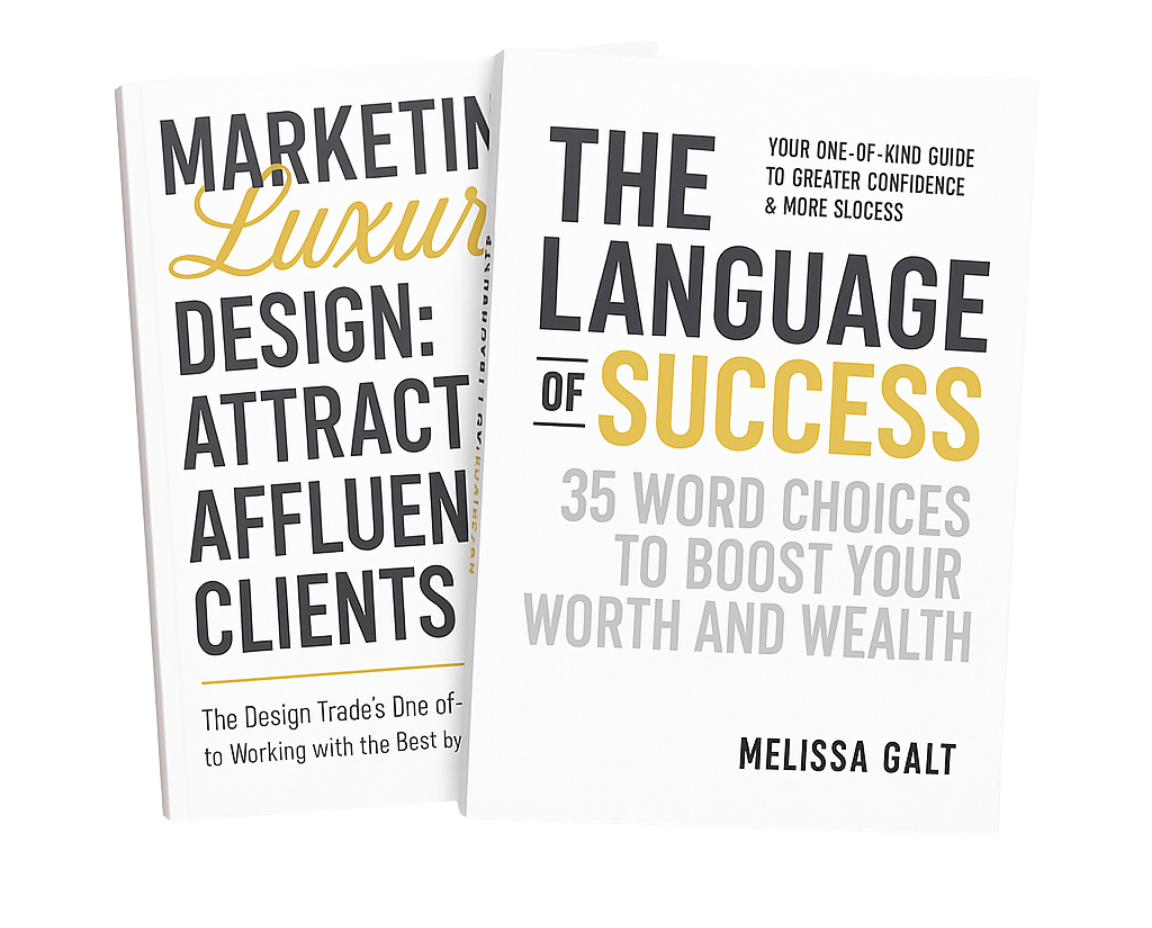
Book Bundle
Marketing Luxury Design:
Attracting Affluent Clients
The Design Trade's One-of-a-Kind
Guide to Working with the Best
The Language of Success:
35 Word to Boost Your Worth & Wealth
Your One-Of-A-Kind Guide To Greater Confidence and More Success
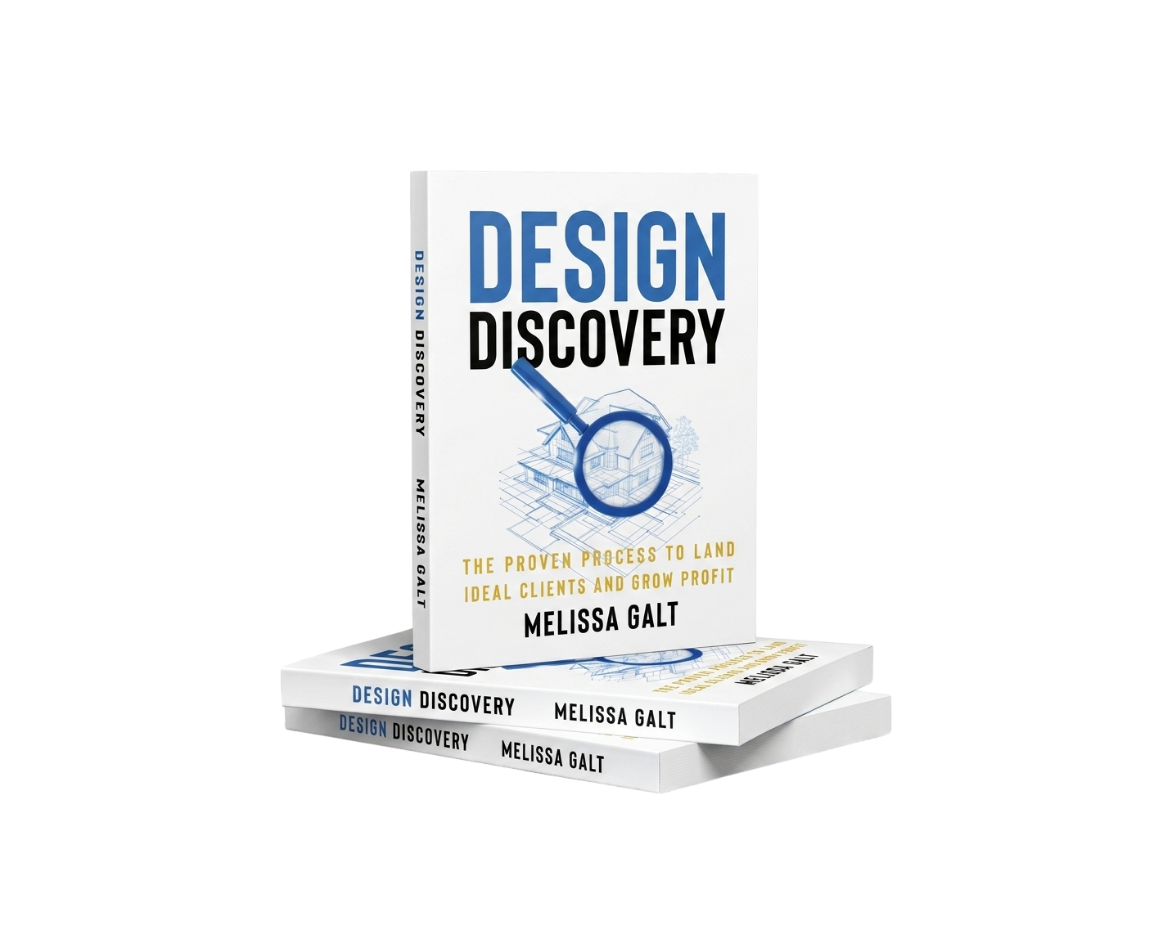
Design Discovery
The Proven Process To Land
Ideal Clients and Grow Profit