How Design Firms Use AI Without Sounding Generic

Ever opened a proposal you built with AI and felt it could have come from any firm in any city? The structure is clean, the grammar is perfect, and the whole thing reads like a template a stranger filled in. That sameness is what loses the affluent client, and it is fixable in minutes once you know which parts of a presentation AI should touch and which parts stay yours.
Key Takeaways
- AI makes presentations look generic because it defaults to hourly, feature-listing, apologetic language; it only sounds like you after you feed it your positioning and your exact word choices.
- Use AI for the framework (outlines, scope summaries, formatting, first drafts), and keep the value language and the fee number in your own hands.
- Swap the words that quietly shrink your worth: “investment” for expensive, “value” for price, “when” for if. A proposal built on those words reads premium no matter who drafted the skeleton.
- Walk your client through your Letter of Agreement live on Zoom or in person, connect each clause to a benefit, say your number, and stop talking. The pause after a confident fee is where the yes lives.
Why do AI-built design presentations look generic?
AI presentations look generic because the tool has no idea who you are, so it reaches for the safest, most average language and images in the industry. Left on autopilot, it bills by the hour, lists deliverables like a grocery receipt, and softens your fee with a dozen qualifiers. That is exactly how every other firm sounds, which is why your deck blends into the pile.
The fix is not a better prompt template floating around online. It is giving the model the raw material only you have: how you position your firm, the vocabulary you use with clients, and the transformation you sell. When you skip that step, you hand your voice to a machine trained on the blandest writing on the internet. When you supply it, the output starts in your register and you edit from there.
Affluent clients are educated, discerning buyers. They notice the difference between a proposal written for them and a proposal written for no one. Generic language signals a generic experience, and that is the fastest way to invite line-item scrutiny on every invoice.
What should interior design firm principals use AI for in a client presentation?
Use AI for the parts that eat your evening and add no magic: structure, formatting, summarizing your project notes into clean scope language, and a rough first draft you then rewrite. Keep the value framing and the fee in your own hands, because those two things decide whether the project closes.
Think of it as a division of labor. The model handles the grunt work of turning twelve pages of site notes into an organized scope of work. You handle the sentence that tells the client why a home they will live in 24/7/365 for the next 15 to 20 years deserves this level of design.
| Presentation task | Where AI saves you real time | Where you stay hands-on |
|---|---|---|
| Scope of work | Drafts a first-pass outline from your notes | Rewrites each line to connect to a client benefit |
| Concept narrative | Suggests structure and tightens wording | Supplies the point of view and the story |
| Fee presentation | Formats the page cleanly | Sets the number and the value language, always |
| Pitch deck slides | Builds a consistent layout | Chooses the one idea per slide that lands |
| Follow-up summary | Recaps the meeting in minutes | Adds the personal detail that proves you listened |
The rule that keeps you out of trouble: AI should never write the words your client reads about your value and the investment. It drafts the skeleton; you translate it into your own vocabulary. For a wider view of which tasks are safe to delegate to a model, the details in scaling with AI authentically walks through where the leverage actually lives.
How do you keep your own voice when AI drafts your proposal?
Feed the model your vocabulary before you ask it to write anything. The words you choose decide project size and income more than your portfolio does, and most designers hand those words to AI by accident. Give it a short style sheet and paste in two or three paragraphs you wrote yourself, then tell it to match that register.
Four swaps change the entire feel of a proposal:
- Investment, never expensive. “Expensive” is meaningless without context and reflects a limiting belief. When you reach for it, you are selling the way you would buy, and your client almost always sits in a higher tax bracket than you do.
- Value, replaces price. Price is simply what someone pays. Value is everything they gain.
- When, instead of if. “When your family gathers in this room” projects confidence. “If you decide to move forward” invites the client to hesitate.
You cannot split your vocabulary either. Designers tell me they only use the old words behind the scenes, never in front of clients. It does not work that way; none of us can split ourselves in two. If “expensive” lives in your head, it leaks into your prompts, and it leaks back out of the model and onto your client’s screen.
Which AI tools work for interior design presentations, and how do you combine them?
A text model handles language, a design tool handles layout, and you handle the judgment that ties them together. Use a conversational model like ChatGPT or Claude to draft and tighten scope and narrative copy, then move the words into a layout tool where you already control the look.
Keep the visual standard high, because the deck itself models the design standards your client is paying for. Clean typography, generous white space, one idea per slide, and a restrained palette read as premium. Dense bullet lists and clip-art icons read as a committee built it. If you present in Canva, build a branded template once so every proposal carries your identity instead of a stock theme. A quick primer on stacking these tools without losing hours lives in 15 ways to amplify your design business with AI.
One warning on images. AI-generated room renderings are tempting for concept slides, and clients can usually tell. Use them for internal brainstorming, and present real work, real materials, and real references when the client is in the room.
How do you present an AI-assisted Letter of Agreement without flinching?
Walk the Letter of Agreement through live, on Zoom or in person, never by email. The flinch, the moment before you send a proposal when you quietly round the number down without being asked, is a worth problem dressed up as a market problem. AI will happily draft you an apologetic fee page, so the final edit is yours: cut every hedge and connect each line to a benefit.
Price the transformation, never the hours. Hourly billing caps your revenue at your calendar and trains clients to watch the clock. A flat fee tied to the result protects your profit and your sanity, and it reads cleaner on the page than a rate card ever will. When you present the number, say it out loud and then stop talking. Over-explaining creates the exact hesitation you fear.
Set a minimum and mean it, so your proposal filters for people who value what you do rather than anyone with a pulse and a Pinterest board. Your fee is a filter. A presentation that leads with confidence attracts the clients who invest; a discounted one attracts the clients who question every invoice and drain your team. For the conversation that happens before the proposal, where this same calm carries the whole meeting, see how a discovery consultation converts without selling.
FAQs
Can interior design firm principals use AI to write client proposals without sounding generic?
Yes, when you feed the model your positioning and your vocabulary before it writes a word. Paste in two or three paragraphs of your own writing, give it your word swaps (investment not expensive, value not price), and have it draft only the structure and scope language. You then rewrite the value framing and set the fee yourself, which is the part no model can do for you.
What are the best AI tools for interior design presentations in 2026?
Pair a conversational model such as ChatGPT or Claude for drafting and tightening copy with a layout tool like Canva where you control a branded template. The text model handles scope summaries and first drafts; the layout tool keeps your visual standard premium. Avoid presenting AI-generated room renderings to clients, since affluent buyers usually spot them and they undercut your credibility.
How do I stop my AI-written proposals from discounting my fees?
Delete the apologetic language before you send, because AI defaults to hedging and over-explaining. Present the number live, connect every line to a benefit, say the fee out loud, and stop talking. Price the transformation the client lives in for 15 to 20 years rather than the hours you spend, and hold a project minimum so your proposal screens for clients who value your work.
Will clients be able to tell I used AI to build my presentation?
Not if you keep the voice, the value language, and the visuals yours. Clients notice generic structure, clip-art slides, and hollow fee pages, none of which come from the tool itself; they come from skipping the edit. Use AI for the scaffolding, invest your own judgment in the words that sell, and the finished presentation reads entirely like you.
Put one branded proposal template and one style sheet of your word swaps in place this week, and every presentation after that starts in your voice instead of a stranger’s.
GET MORE OF MELISSA, ON THE PODCAST!
Subscribe to the podcast, Design Business Freedom™, and get the best in smart systems, proven processes, and the right strategies and resources to take your design practice to the next level.
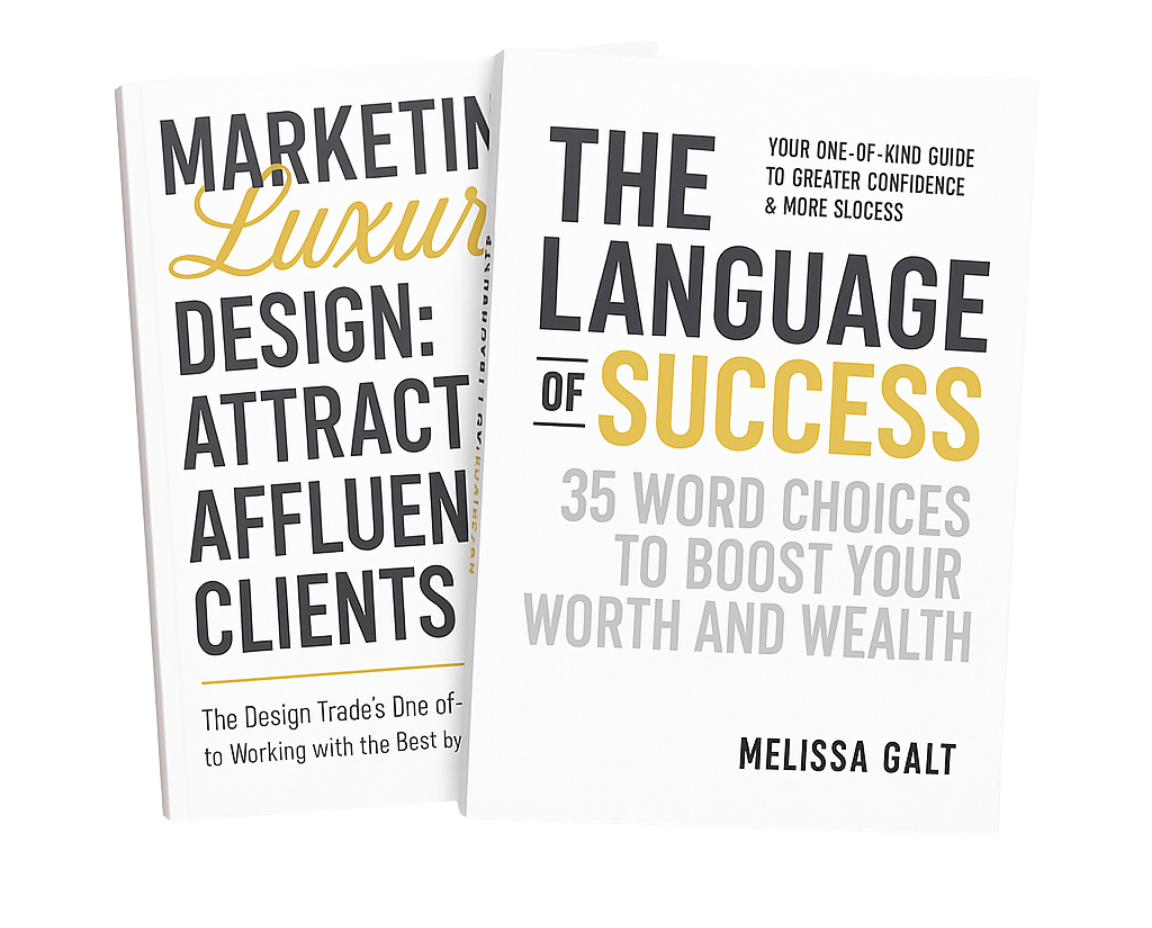
Book Bundle
Marketing Luxury Design:
Attracting Affluent Clients
The Design Trade's One-of-a-Kind
Guide to Working with the Best
The Language of Success:
35 Word to Boost Your Worth & Wealth
Your One-Of-A-Kind Guide To Greater Confidence and More Success
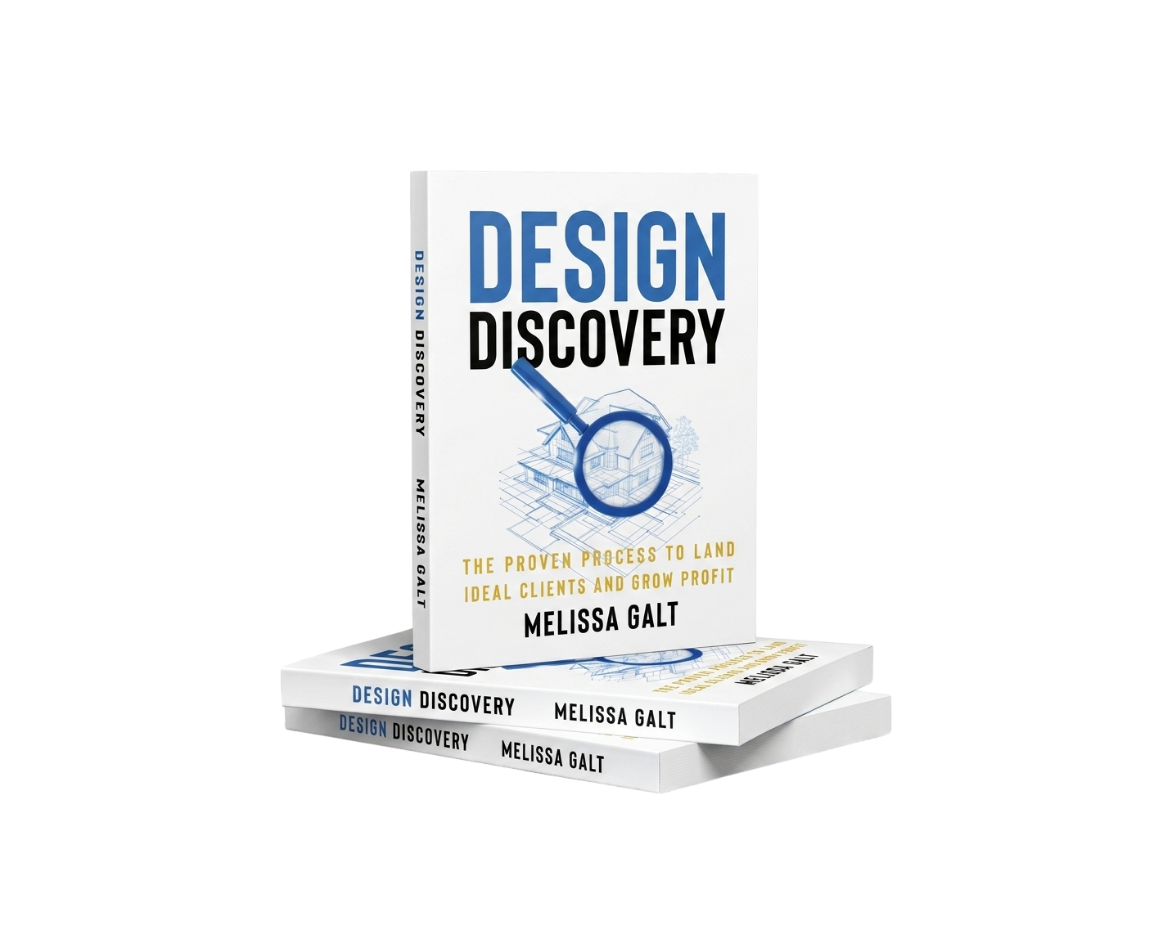
Design Discovery
The Proven Process To Land
Ideal Clients and Grow Profit