9 Proven Ways to Fill Your Interior Design Pipeline with Ideal Clients
Most designers run their business job to job, project to project, client to client, with no wait list and no queue. That puts you on a potentially very unpleasant roller coaster. Roller coasters belong at Six Flags. They are no fun at all when the ride is your cash flow and your profit.
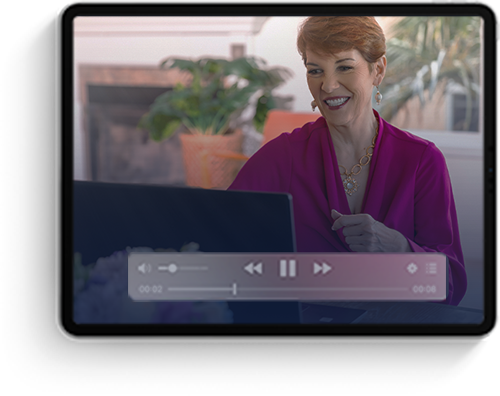
Your pipeline ends the ride. Building one on a steady, consistent basis puts you in charge of which projects you take, which clients you serve, and the timeline you work on. Press play below for the full episode, and use this as your quick reference.
Key takeaways
- Building a steady client pipeline puts you in charge of which projects you take, which clients you serve, and the timeline you work on, ending the cash flow roller coaster of job-to-job work.
- Your favorite clients are your ideal clients: identify three to five clients you’d get up early for, write down everything you know about them (demographics, values, hobbies, occupation), and look for the patterns that reveal where to find more like them.
- A paid VIP wait list protects your capacity and guarantees future revenue by requiring prospects to sign an agreement and provide a non-refundable deposit (often $10,000 or 50% of design fees) to hold their place in your queue.
- Every detail you uncover about your ideal client creates a breadcrumb trail of places to market, people to connect with, and conversations that convert, because points of connection become points of profit.
The Shortcut: Your Favorite Clients Are Your Ideal Clients
If you’ve been in business long enough to identify three to five clients you absolutely love, start there. The ones you’d get up early for. Stay up late for. The ones who trust you completely, invest generously, and treat you with respect.
Write down everything you know about them. Age, marital status, kids, career, education, hobbies, values. Then look for the patterns. When I did this across 40 clients, my favorites numbered 8 to 10. That’s Pareto’s Principle in action: 20 percent of my clients were delivering 80 percent of my revenue.
The Four Types of Client Intel
1. Demographics: The Facts
Male or female matters because men and women are wired differently. Men tend to be more direct, need fewer options, and search through digital channels. Women connect through friends, family, and social media. Your website should reflect which you’re attracting.
Age defines life stage. A client at 35 is in a completely different place than one at 55. Young families, peak earners, empty nesters, gray divorce, single legacy. Each has different priorities, different investment levels, and different triggers for hiring you.
Children are points of connection. Parents connect across every boundary. If you have kids, leverage that in your bio, your content, and your networking. If you don’t, that’s a point of connection too. I’m single, no kids, and I’ve attracted a remarkable number of clients in the same boat.
Education is powerful. My very first design client came from a mailing to Cornell alumni in Atlanta. When you’ve spent four years at a university, you are predisposed to want to work with someone who went there too. Share your institutions. They are points of connection.
Occupation tells you where to meet them. If your ideal clients are tech professionals, go speak at a tech association about home office design. If they’re doctors, find medical associations. Every occupation has a gathering place.
2. Psychographics: Their Values and Triggers
What books and magazines do they read? If you’re spending money on advertising, you’d better make sure your ideal clients are reading where you’re placing ads. Don’t guess. Call your favorite clients and ask.
What podcasts do they listen to? What movies and shows do they watch? What music do they love? Could you create a playlist tailored to a client’s musical taste and the room you designed for them? Design is about all the senses. Don’t leave any out.
What are their hobbies? One designer I coached was a former equestrian who gave it up for her business. When I asked where her ideal clients came from, the answer was horseback riding. I told her to go get a horse. She rented Ernie. A year later, her business bought Ernie. Her company name is on Ernie at every show. She’s doing what she loves and meeting ideal clients.
What makes them happy? What makes them crazy? What’s their trigger? What’s their pet peeve? This is not an interrogation. It’s curiosity. And curiosity connects.
3. Group Graphics: Where They Belong
Veterans, cancer survivors, pet lovers, religious communities, athletic leagues, charitable organizations. These are all groups your ideal client may belong to, and they are all potential pathways to connection.
I discovered that many of my favorite clients were Jewish, and the reason was connected to a shared love of contemporary design. I spoke at local synagogues. I landed clients. You don’t have to belong to a group to serve it. But if you do, that’s an automatic advantage.
Pets are one of the most powerful points of connection. Dog lovers share pictures of their dogs. If you have a pet, put them in your branding photos. Make them part of the team. One of my favorite projects was inspired entirely by a client’s silvery gray cat with lime green eyes. The whole home was done in shades of gray with pops of lime.
4. Geographics: Where to Find Them Physically
Where have your clients lived? Where did they go to school? Where have they worked? Each of these is a potential point of connection. I’ve found connections with clients in the back of an Uber in Chicago because of a summer camp in New Hampshire 40 years ago.
We are all far more connected than we realize. The key is bringing those connections to the surface so they can shine and deliver profit.
Points of Connection Become Points of Profit
Every detail you uncover about your ideal client creates a breadcrumb trail of places to market, people to connect with, and conversations that convert. This is not hard. It is not complicated. It is deeply personal, wildly effective, and so rarely done that when you do it, the results are extraordinary.
Not everyone deserves your talent. Write that down. Put it on your monitor. Put it on your dashboard. Put it on your bathroom mirror. Your ideal clients do deserve you, and you deserve them.
Ready to Work with Your Ideal Client?
Once you know who your ideal client is, then you need to know how to take them on the Design Discovery path that guarantees you land your ideal clients and let go of the rest. Grab your copy of my new book. Design Discovery: The Proven Process to Land Ideal Clients and Grow Profit
Listen to this episode on Design Business Freedom™ Podcast – Episode 194
Available on Apple Podcasts, Spotify, Audacy, Deezer, Podchaser, and Everand.Your Interior Design Profit Pipeline Ends the Roller Coaster
I talk with a lot of designers who are burned out or on that path to it. They tell me they can’t take on another project for three months, or six, or even in the next thirty days. That is completely fine. I am not asking you to overload yourself or sprint toward burnout. What I want you to build is a quality queue, so you always know what comes next. And you are always in control of your workload.
When you have a pipeline, you know that as you wrap up your current projects, the next one is waiting, and the one after that. You are no longer guessing. You are managing your workload, and you are planning your profit. That’s the whole point, and it changes how it feels to run your business.
Start With a Paid VIP Wait List
This is the piece most designers are afraid to try, and it is the most powerful. Do not tell a prospect you are not taking new projects right now. Instead, give them a real date: “we will be launching new projects January 15th.” If they are good with the date, you tell them, “Terrific, we’ll move you into our design discovery process, and when it’s a fit we’ll provide your design agreement with scope of work and an estimated timeline.”
Then comes the part that protects you. They sign your agreement and provide a non-refundable deposit against your fees. That might be four or five figures depending on the project. I have designers using a minimum of $10,000, and others requiring 50% of design service fees, which are non-refundable.
It holds their place in your queue as a VIP and guarantees you will start on the date you gave. So be careful with that date, because it is a promise. I always tell them, “we’ve engraved your date on your calendar and looking forward to kick off at 9am with a festive beverage and bite.” It needs to be an occasion.
If you are thinking no one will do this, trust me, they are doing it right now. Your ideal clients will wait for you. They want your talent, your eye, your experience, not another design firm. Design is a long-term investment. The money is short-term, and they enjoy the result for 15 to 20 years, so waiting isn’t a big ask. And they can tick the box “go our design firm.”
Don’t get nervous and squeeze them into next month, which will squeeze you and your team in return. Be strategic, protect your peace of mind, and let the wait list do its job.
Give Every Strategy 90 Days
To give any strategy a fair shake, commit to 90 days. Not five days. Not a month. Ninety. Long enough to push through the doubt and reach the point where you say, oh, it is working. And if it still isn’t delivering desired outcomes at 90 days, don’t simply dismiss it. Look for the lesson, because the lessons are often priceless. Now, the nine strategies, each one tested and in use by designers today. Pick one or two and commit.
1. Landscape Signage
I call it landscape signage, not yard signs, on purpose. Yard signs don’t sound like something you would place in front of a million-dollar home. But it works. I had a flooring contractor put their sign out on my project, and they walked away with five more jobs in that neighborhood.
I didn’t put one out, because I thought it was tacky. Big mistake. Then I learned Kelly Hoppen, London’s top interior designer, landed one of her best projects from a single garden sign outside a London brownstone. If Kelly Hoppen uses landscape signage, so can you. In fact, driving through the multi-million dollar neighborhoods in Atlanta, there was plenty of signage from builders, architects, less so from designers. It’s time we caught up!
Keep it simple and readable from a slow-moving car, with your website, phone number, and a QR code big enough to scan in the moment. Make it sturdy and double-sided. FastSigns and Alpha Graphics both do reliable work; Vista Print is another option.
Order five, keep five on hand, keep five in the field, and have someone check them every week or two so they remain clean and in good repair. Always get your client’s permission, put it into your letter of agreement, and when you place the sign, make it an occasion with champagne or sparkling cider. The sign says it best: I am vetted, this client hired me, and you can hire me too.
Oh and I do have design firms where the clients help them install their signage. You don’t frame this as marketing, instead you say, “we’re proud to be the interior design firm of record for your project and that’s why we use landscape signage.”
2. Hand-Pick the Interiors You Want to Create
This one lets you choose your projects from your office chair. On Zillow, Redfin, or Realtor.com, look at recently sold homes that fit your criteria: a price range, a look and feel, certain neighborhoods or gated communities. Then send a beautiful card. Heavy stock, weighty in the hand, hand-addressed, with a personal return address rather than your firm name so it gets opened.
Inside, include a QR code on the card, that gives access to cheat sheet of 10 local gems: a couple of restaurants, a day spa, a florist, a vet, a dry cleaner, a dentist, a chiropractor, an insurance agent, a financial advisor, and a caterer. Realtors are supposed to do this and many do not, which is your opening.
Lead with Dear Wonderful New Homeowner or Welcome to the Neighborhood, never Dear Resident. Treat it as a system and send five to 10 a week. The reward is that you get to hand-select the interiors and the clients you want, because you need both. The ideal project and the ideal client. One without the other does not work.
3. Partners in Profit
There are countless collaborations available, what I call partners in profit. Not a legal partnership, a relationship with someone who serves your ideal client and does not compete with you.
Wine is a perfect example. The vendor who builds the cellar does not provide furnishings, artwork, or specialty lighting. You do. Partner with a wine cellar manufacturer, a wine distributor, a local high quality wine shop, or a restaurant who hosts wine events and let their tastings and wine dinners put you in front of a certain caliber of person.
Affluent clients often enjoy wine and many of them collect. If you aren’t a wine drinker, skip it, or swap in spirits. If none of those fit, move to the next option.
4. Speak, Then Always Raffle
Speaking works beautifully when you enjoy it, and this is not about introvert versus extrovert. Home shows, women’s clubs, mom’s day out, and HOA events can all be excellent. Be selective, because a DIY audience will not serve you. You want the done-for-you clients.
Your talk must be structured, not a stream of tips, and woven through with client stories and testimonials so the room thinks, I could work with this designer. And always run a raffle, because it is the single best way to capture everyone’s information.
Raffle a complimentary discovery consultation and quietly let everyone win while each person believes they were the only one. One designer I coached was about to close her doors. She followed my home-show plan to the letter, raffle and follow-up included and booked out for six months. The follow-up is always on you. Nobody is likely to call you when you focus on handing out your cards.
5. Getting Fit Can Earn You a Fortune
I have met clients through Pilates, spin class, and hiking. When you are exercising, having fun, and releasing endorphins, people are friendly. Be strategic about timing, because the folks exercising at noon aren’t usually the movers and shakers.
If you already go to a gym, look for a higher-level one, or form an alliance with a personal trainer who works with affluent clients and refer each other. And always listen for what your client needs beyond design.
I have referred financial advisors, dentists, childcare, party planners, and housekeepers. Being a one-stop resource keeps you top of mind, and top of mind is how you earn the referral.
6. Builder Buddies for Big Bucks
Builders can be a tremendous source of work, but not all of them are a fit, so be selective and check them out online. The goal is a relationship, not a pitch. Find out about them. Do they golf or boat? A favorite team? Kids, and where do they go to school? Complement on a recent project. A subject line like congrats on the such-and-such project gets opened. Let me partner gets ignored, because why would they care yet?
Make it about them until they discover you can take client work off their plate, then they lean in. You can even befriend the person running their Instagram and build the connection there. On a panel I facilitated in Chicago, a designer described meeting a builder where they simply admired each other’s work.
She later showed him a binder of elevations and construction documents and blew him away. But the relationship came first. Ditch the pitch, build the relationship, and the relationship drives revenue.
7. Know What Your Ideal Client Drives
An architect, I worked with, told me he invested $20,000 in a Bentley sponsorship, flew to London for it, and six months later had nothing. I asked one question: do your ideal clients drive Bentleys? Long silence. No, he said. They drive BMW, Lexus, and Land Rovers. They were millionaires next door, high net worth, not ultra, and he never checked.
At the affluent level, everything is relational. Think of the Netflix special Inventing Anna. Nobody checked her resume because in those circles they take a friend’s word. So, skip the sell and make it about connection. If you know the brands your ideal client drives, explore an event with a local dealership. They want the traffic, they have deep pockets, and they will bring the wine, the music, and the valet. You bring your list, they bring theirs, and everyone wins.
8. Give Back Where the Movers and Shakers Gather
Affluent clients are philanthropic. Do you know which charities your clients support? Imagine a note once a year saying you donated in their name to their favorite cause, timed to the anniversary of their project. It is far more powerful than a Christmas card, because it arrives when no one else’s does.
Better yet, get involved. Join a committee, where the movers and shakers hang out. A VIP registration committee is ideal, because you often get the guest list in advance. Do not abuse it. Look up five key names on LinkedIn so you can recognize them as they arrive. I did this by accident once, and the person I recognized became a long friendship and a steady source of referrals.
9. The Newsletter Swap
This one requires a list, which is exactly why building your list is so valuable. Find a business owner who shares your ideal client but does not compete with you: a builder, architect, realtor, florist, caterer, a furnishings company that does not design, a boutique, a restaurant, or a high-level gym. You feature them in your newsletter; they feature you in theirs.
You write their feature, they write yours, and each of you reserves the right to edit. It is a mutual endorsement and no money changes hands. Send your digital newsletter at least once a month, ideally twice, so you stay remembered through the noise. That is one more reason to finally build your list with a digital newsletter.
Frequently asked questions
How do I identify my ideal interior design client?
Start with three to five clients you absolutely love, the ones you’d get up early for who trust you completely, invest generously, and treat you with respect. Write down everything you know about them: age, marital status, kids, career, education, hobbies, and values. Then look for the patterns. You’ll likely find that 20 percent of your clients are delivering 80 percent of your revenue.
What is a paid VIP wait list for interior designers?
A paid VIP wait list requires prospects to sign your agreement and provide a non-refundable deposit (often $10,000 minimum or 50% of design service fees) to hold their place in your project queue. You give them a real start date, move them into your design discovery process, and when it’s a fit, provide your design agreement with scope of work and estimated timeline. This protects your capacity and guarantees you will start on the date you promised.
What are the four types of client intel I should gather?
The four types are demographics (facts like gender, age, children, education, and occupation), psychographics (values and triggers including books, podcasts, hobbies, and pet peeves), group graphics (organizations they belong to like veterans groups, religious communities, or pet lover networks), and geographics (where they’ve lived, gone to school, or worked). Each type creates breadcrumb trails of places to market and people to connect with.
Ready to Fill Your Pipeline?
Pick one strategy. Give it 90 days. Watch your pipeline fill with ideal, hot, buying clients and juicy projects. Press play above for the full episode, including every story and the how behind all nine.
When you are ready to land the right clients and let go of the rest, grab my book, Design Discovery: The Proven Process to Land Ideal Clients and Grow Profit.
Listen to this episode on Design Business Freedom™ Podcast – Episode 196
Available on Apple Podcasts, Spotify, Audacy, Deezer, Podchaser, and Everand.
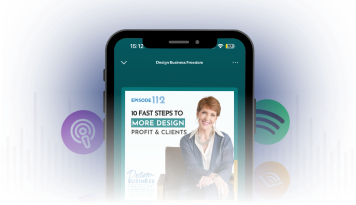
GET MORE OF MELISSA, ON THE PODCAST!
Subscribe to the podcast, Design Business Freedom™, and get the best in smart systems, proven processes, and the right strategies and resources to take your design practice to the next level.
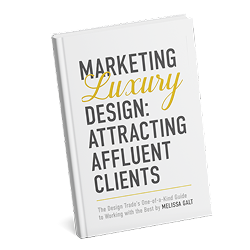
Marketing Luxury Design: Attracting Affluent Clients
The Design Trade’s One-of-a-Kind Guide to Working with the Best

The Language of Success
Your One-Of-A-Kind Guide To Greater Confidence and More Success