Scale Your Interior Design Practice: Build the Right Team
TL;DR
Your interior design business can only grow as fast as you can. That is not a motivational line. It is a math problem. When every decision runs through you, your capacity is the capacity of the firm.
Team building is Pillar 4 of the Profitable Design Studio Framework and Episode 5 in the Scale Your Interior Design Practice Sustainably series. When to hire, who belongs on your team first, how to delegate so it sticks, and how boutique firms run multiple six and seven figures with teams of 2 – 7.
Highlights
➜ 02:00 You are the ceiling, and why it is math rather than motivation
➜ 07:00 The warm body hiring syndrome and the 4 signals that it is time to hire
➜ 10:30 Why your first hire is almost never a junior designer
➜ 16:00 The AI tool that writes your job descriptions, interview questions, and onboarding
➜ 23:00 The signature style protocol that gets you out of installs
➜ 27:00 How to delegate so it sticks, including false deadlines
➜ 36:00 Hire character, train skill, and 2 designers who stopped being the ceiling
➜ 42:30 The week-long time audit that makes your case for hiring
You Are the Ceiling on Your Scale
When every decision runs through you, your calendar is the firm’s calendar. When you get sick, take a vacation, or need a weekend, the whole thing idles like a car that is neither parked nor going.
What makes it challenging is that the hero’s role feels good. It feels like devotion. So you keep the cape on, the crown, and the cuffs. I wore the whole outfit for years, proud of being the one who could fix anything at any hour. What I was proud of was being indispensable, which guarantees to keep you trapped instead of experiencing Design Business Freedom.™
That is a structure problem, not a talent problem. It costs you the projects you have no room for, the rate you’re too busy to raise, and talented team members who will not stay where they are never trusted to own anything.
Hire Before You’re Drowning
Most design firm principals hire at exactly the wrong moment: overwhelmed, underwater, and desperate. I call it the warm body hiring syndrome. You skip the interviews, the references, and the trial project, and you hire the first competent person who says yes.
No onboarding is ready, and no process is documented. The new hire asks 40 questions you have no time to answer, and within 3 weeks you conclude hiring does not work for you. Hiring works well. The poor timing and lack of preparation were the problem.
The signal to hire is not exhaustion. It is these.
1. You consistently work past the hours you designed for yourself, which for most of us means more than 40 a week.
2. You do tasks below your talent and genius grade. (You want to be focused on the $100 and $1K tasks and delegate the $10 – $50 tasks, and there are a lot off those.)
3. You slow your pipeline on purpose because you cannot take on more projects and clients.
4. You have a documented process a competent hire could run tomorrow, but you are still running it.
Hire ahead of the need by 1 to 3 steps, not 5, which strains a practice that has not grown into it.
Your First Hire Is Almost Never a Designer
When interior designers commit to hiring, they reach for a junior designer. It makes emotional sense, since design is what you love and design is piling up.
Look honestly at your week. Real design is a fraction of it. The rest is admin, procurement, tracking, expediting, invoicing, receiving, client updates, and vendor chasing. That’s the work that makes your days feel like chewing foil, and that’s the load to hire first.
An operations assistant who owns paperwork and the calendar. A procurement and expediting specialist, in-house or outsourced, who saves you money and errors in the first quarter. A bookkeeper, because even designers who came from accounting left it for a reason. Or a client concierge. One designer I coached made a concierge their very first hire before crossing seven figures, and reactive client emails dropped by half.
And part-time counts. Ten or 20 hours a week of the right person is transformative.
Document First, Including Your Signature Style
You can only delegate what you have documented. A process living only in your head produces vague instruction, a series of uncomfortable corrections, frustration on both sides, and you taking it back.
Of course nobody does it like you. You never told them how. You haven’t shown them examples of your standards and protocols.
Installations are the perfect example. I believed I was indispensable there until I realized I already had professional photography of every styled bookcase, complete coffee table, and well-dressed bed. Compile those into a signature-style standard, and your team handles the first several hours or days while you sail in for the final hour or two.
When training feels impossible, document three things first. The three tasks you repeat most, that need the least of your expertise, and that consume the most of your week. They become your first hire’s job description, onboarding, and first month.
And resist the everything-but-the-kitchen-sink job description. It is usually two or three separate roles combined into one. My Design Dream Team Builder, an expert, AI-based tool, turns answers to six questions into tailored job descriptions, interview questions, a scorecard, paid trial projects, and 30-60-90 day onboarding plans, and it writes SOPs too. It will save you time and sanity.
How to Delegate So It Sticks
Delegation is not losing control. It is creating capacity.
Delegate the outcome, not the keystrokes. Share the SOP, then define what done looks like, when it is due, the constraints, and who to ask when stuck, which may not be you. Their path will differ from yours, and different might even be better.
Use false deadlines early. Need it Thursday? Ask for Tuesday. Pad everything by 3 to 4 days, with contractors and reps too, so a pear-shaped moment has room to be solved.
Schedule the check-in rather than hovering. One planned review is support. Six unscheduled drop-ins are surveillance, and your team feels the difference. They are not on parole.
Never take work back silently. Coach it and return it. The quiet fix at 10PM teaches your team your standard is optional and guarantees you will still own that task next year.
And stop copying yourself on every team email beyond the first few weeks. It chokes your inbox and tells your team they are not trusted.
The 80 Percent Rule
Nobody does it quite like you. True, and not the point. 80% done by someone else, on time, beats 100% done by you at 2AM
That missing 20% is usually preference. The wording of an email and the font on a spreadsheet nobody outside your office will see. Done beats perfect, because perfect is a moving target that is never now and always tomorrow.
Your client cannot tell. Your client can absolutely tell when you are exhausted and short on the phone. And sometimes your team member’s 80% is closer to 100% than your ego wants to admit. That is not a threat. That is a well-hired team.
Building Your Interior Design Team: Hire Character, Train Skill
I will hire attitude over aptitude all day long. Software is teachable and your process is documented. What you cannot train into an adult is reliability, curiosity, follow-through, discretion, and genuine care for the client experience. One difficult hire can poison a whole team.
Ask what they did when something went wrong and what they own at their current job that nobody checks. Then give a small paid trial project, because four hours of real work tells you more than four interviews.
Andrea, principal designer and CEO of Jeffery Design Studio in the Bay Area, CA, went from solo to a team of five in only eight months, quadrupled revenue, took her family on their first vacation in five years, and is home by 6pm with weekends off. We cut her hours dramatically in the first thirty days of coaching and kept them down, and she has since brought her husband into the business.
Justine, principal designer and CEO of Justine Knox Designs in Mallorca, Spain, reorganized her team and brought her grown children in, so the firm is now a family affair. She built her 4-day workweek, doubled revenue while working less, and gave herself a raise that was five years overdue.
The Payroll Fear
What about when I can’t afford it? The fear is legitimate and usually backward. You are weighing a hire as a fixed expense against today’s revenue. Weigh it as capacity that generates tomorrow’s profit.
When a principal tells me they can’t afford support, we open their calendar and almost always find 10 to 20 hours a week of $20–$50 an hour tasks. I want you on the $100–$1K an hour work. That’s an allocation problem, not a money problem.
Your Assignment This Week
Run a week-long time audit starting the moment you start working, phone in bed included. Sort every block into only me, could be trained, or should never have been mine. Add up the last two. That is your case for hiring in your own handwriting.
Then hand off the task at the top of the list this week, with the SOP, the outcome, the deadline, and who to ask. Do not hover, and do not take it back.
Delegation is not losing control. It is creating capacity. That is your writer’s downer.
Frequently Asked Questions
When should an interior designer hire their first team member?
Before you are drowning. The signals are working past your designed hours, doing tasks below your expertise, slowing your pipeline on purpose, or still running a documented process someone else could run.
Should my first hire be a junior designer?
Rarely. Most of your week is operations rather than design, so an operations assistant, procurement specialist, bookkeeper, or client concierge usually relieves more load first.
How big a team do I need to scale my interior design practice?
Boutique firms generate multiple six and seven figures with teams of 2 to 7. Size depends partly on local overhead, and contractors and outsourced support all count.
How do I delegate without redoing the work myself?
Delegate outcomes with a clear definition of done, a padded deadline, and a scheduled check-in. When work falls short, coach it and return it rather than fixing it silently.
What about when I don’t think I can afford to hire?
Audit your time. Most principals find 10 to 20 hours a week of low-value tasks. Start with part-time, contract, or outsourcing one function.
About Melissa Galt
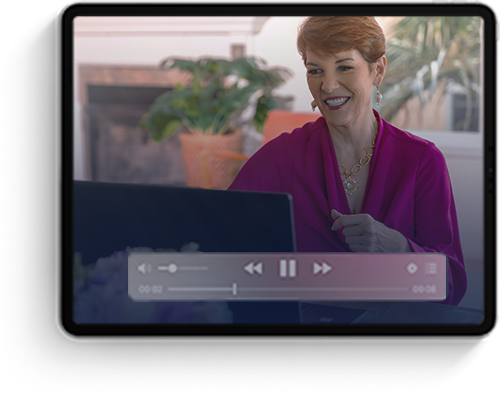
Melissa Galt is a sought-after business coach, marketing consultant, keynote speaker, and workshop leader who empowers designers to build highly profitable businesses without the burnout. With over three decades as the principal of her successful namesake residential design firm, Melissa brings firsthand experience and proven strategies to guide creative professionals toward earning more in less time, with less stress.
She is the author of four transformative bestselling books, Marketing Luxury Design: Attracting Affluent Clients; The Language of Success: 35 Words to Boost Your Worth & Wealth; Design Discovery: The Proven Process to Land Ideal Clients & Grow Profit, and Proximity to Profits: 50 Strategic Locations to Meet Affluent Clients.
She is also the host of the weekly Design Business Freedom™ podcast, where she shares unfiltered advice on mindset, money, and marketing for interior design pros ready to elevate their game. When you’re ready to take your practice to the next level, book a complimentary Design Business Assessment with Melissa.
Melissa draws inspiration from her legacy of iconic creatives including her mother, the late Academy Award-winning actress Anne Baxter; her godmother, the legendary eight-time Oscar-winning costume designer Edith Head; and her great-grandfather, American architectural icon Frank Lloyd Wright.
Get your Design Dream Team Builder at melissagalt.com/interior-design-templates.
Listen to this episode on Design Business Freedom™ Podcast, Episode 210.
Available on Apple Podcasts, Spotify, Audacy, Deezer, Podchaser, and Everand.
GET MORE OF MELISSA, ON THE PODCAST!
Subscribe to the podcast, Design Business Freedom™, and get the best in smart systems, proven processes, and the right strategies and resources to take your design practice to the next level.

Book Bundle
Marketing Luxury Design:
Attracting Affluent Clients
The Design Trade's One-of-a-Kind
Guide to Working with the Best
The Language of Success:
35 Word to Boost Your Worth & Wealth
Your One-Of-A-Kind Guide To Greater Confidence and More Success
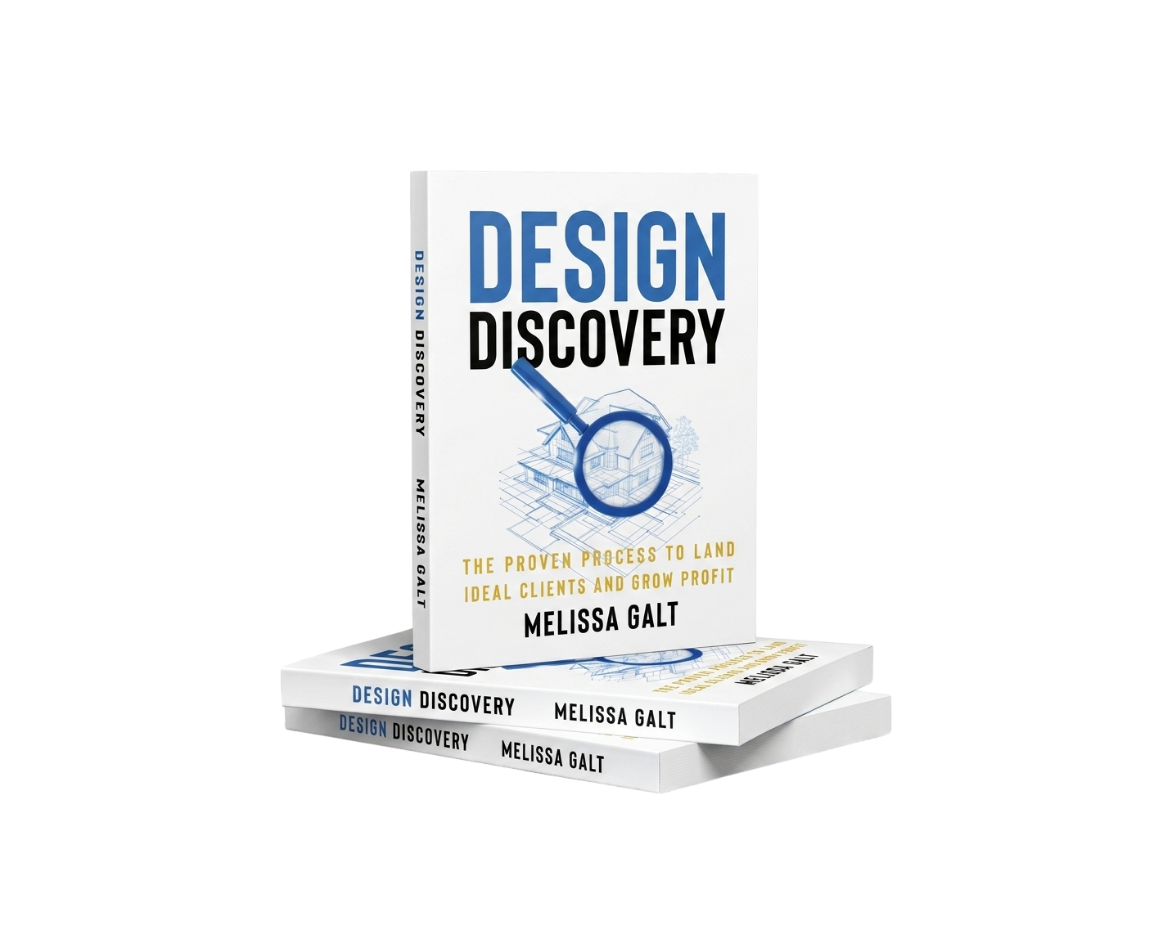
Design Discovery
The Proven Process To Land
Ideal Clients and Grow Profit